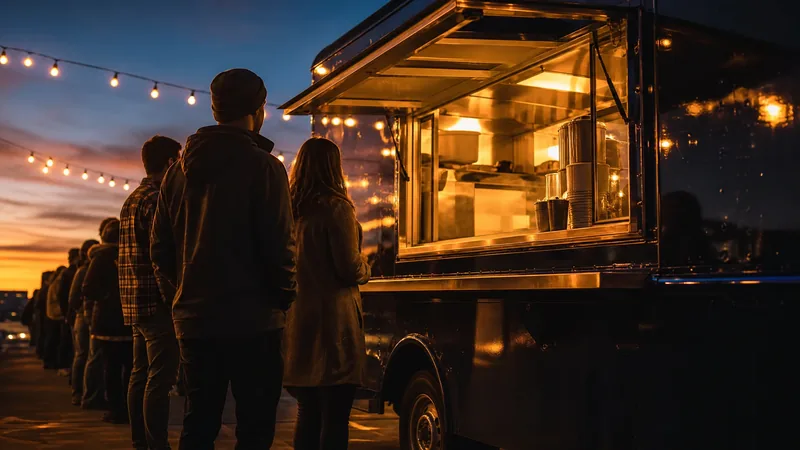
Starting a Food Truck in Tacoma: $225 City License, TPCHD Permit and the Seven Curbside Sites
Starting a Food Truck in Tacoma: $225 City License, TPCHD Permit and the Seven Curbside Sites
If you search for a Tacoma food truck permit, you will find that it is not one document. It is a stack of state, county and city approvals, and the order you file them in matters. Skip a step or file out of sequence and you can lose weeks waiting on a correction. This guide lays out the sequence we would follow today: the state business license through the Department of Revenue, the Tacoma-Pierce County Health Department (TPCHD) mobile unit permit, the $225 City Food Truck License, the annual city business license, and the curbside program in Tacoma Municipal Code (TMC) 6B.175 that allows trucks to work from seven pre-approved right-of-way sites.
Washington has 39 counties and 281 incorporated cities and towns, and each agency sets its own rules. Figures marked as needing a check are not settled numbers, so confirm them with the agency named before you budget or sign anything.
What to Gather Before You Apply
Pull these together before you open any application. Most delays come from missing documents, not from the agencies.
- Your legal name, a Social Security number or a federal Employer Identification Number (EIN) from the IRS, and a mailing address.
- A business name you have checked for availability. If you will operate under any name other than your legal name, you will need a trade name registration.
- If you form an LLC, a registered agent with a physical Washington street address and an email address. PO Boxes and private mailbox addresses are not accepted.
- Truck details: year, make, model, VIN, and a floor plan showing sinks, cooking equipment, refrigeration, water storage and waste holding.
- A written menu with preparation methods, since TPCHD will ask how you handle and store food.
- Your commissary or servicing area arrangement. Confirm with TPCHD what it expects you to document.
- A certificate of insurance for the city license. Ask the city for the required coverage amounts before you buy a policy.
- A restroom access agreement signed by the property owner, if you plan to use a curbside site.
- Fire suppression and extinguisher details for the Fire Department inspection.
Step 1: Choose a Legal Structure
Sole proprietors and general partnerships do not file with the Secretary of State. You can start under your own name and move straight to the state business license in Step 2. Many food truck owners form a limited liability company (LLC) to separate personal and business liability, and that choice requires a state filing.
An LLC is formed by filing a Certificate of Formation with Initial Report through the Corporations and Charities Filing System at ccfs.sos.wa.gov. The filing fee is $180. Expedited service costs an extra $100 per entity and is generally processed within three business days. The name must include Limited Liability Company, Limited Liability Co., L.L.C., or LLC, and it must be distinguishable from every other business name on record. If you need time to decide, a name reservation costs $30 and holds the name for 180 days.
Every LLC must also file an annual report for $70. It is due by the last day of the month in which the LLC was originally formed, every year, and it can be filed up to 180 days early. A late filing carries a delinquency fee, bringing the total to $95. Put the due date on your calendar the day the company is formed.
Step 2: Register With the Business Licensing Service
Washington's statewide application is run by the Business Licensing Service (BLS) inside the Department of Revenue. One application issues your 9-digit Unified Business Identifier (UBI) and handles state endorsements and the city endorsements of cities that use it. Tacoma runs its own business license through the city Tax & License office and FileLocal rather than the BLS, so you will register with the city separately. File it at dor.wa.gov/open-business/apply-business-license. The processing fee is $50 to open a business, plus any separate endorsement fees.
An LLC must have its Certificate of Formation on file with the Secretary of State before you submit the BLS application. Sole proprietors can apply directly.
You will likely need this license if you need city endorsements, operate under a name other than your legal name, plan to hire employees within 90 days, sell anything subject to sales tax, or expect gross income of $12,000 or more per year. Food sales are generally subject to sales tax, so most food truck owners will need the license.
Timing depends on the route. Online applications take about 10 business days, and 2 to 3 weeks longer when city or state endorsements need approval. Mailed applications can take up to six weeks. File online if you can, since mailed applications are the slowest route.
If your truck is branded with a name other than your legal name, register it as a trade name. The fee is $5 for each trade name, filed through the Department of Revenue, not the Secretary of State or the county. If you add a trade name to an existing business, the BLS processing fee is $10 instead of $50. Details are at dor.wa.gov/manage-business/grow-business/register-trade-names.
Step 3: Get the TPCHD Mobile Unit Permit
A food truck operating in Pierce County needs a Mobile Unit Permit from the Tacoma-Pierce County Health Department. This is the health-side approval, and it is separate from every city and state license. Check TPCHD for current fees before you budget, because the amount is not confirmed in this article.
Contact TPCHD early. Describe the truck and menu, and ask whether a plan review is required before you buy or convert the vehicle. Ask which commissary and servicing arrangements it accepts, and what it needs to see for handwashing, potable water, wastewater holding and food storage temperatures. Ask about food worker and person-in-charge training requirements for your staff. Schedule the inspection only after the equipment is installed, because a truck inspected before it is finished will likely need a second visit.
Step 4: Check Whether L and I Must Approve Your Truck
If your truck is enclosed, ask the Department of Labor and Industries (L&I) whether it needs an approval. Do not assume it does not. L&I also licenses electrical work, so any generator hookup, shore power connection or wiring should be done by a properly licensed electrician. Ask the electrician for written documentation of the work, because the Fire Department inspection in Step 5 will look at the installation.
Step 5: Arrange Insurance and the Fire Department Inspection
The City Food Truck License requires proof of insurance and a passed Fire Department inspection. The city sets the coverage requirements, so request them in writing and give your broker the exact limits and wording. Do not buy a generic policy and hope it qualifies.
For the inspection, ask the Tacoma Fire Prevention Department what the inspection covers for your equipment. Confirm the scope with the Fire Department before the visit so you can correct problems in one pass.
Step 6: Apply for the $225 City Food Truck License
The Tacoma City Food Truck License costs $225. The city's requirements include commercial liability insurance, a copy of your TPCHD Mobile Unit Permit and Sales Site Agreements, and a Fire Department inspection of the vehicle, so get the TPCHD permit first. Keep copies of everything you submit, and contact the City of Tacoma Tax & License office about the application process.
Separately, you will pay the annual Tacoma business license, which the city administers outside the BLS and which ranges from $37 to $2,000 depending on your income. The city describes the City Food Truck License as in addition to your annual Tacoma business license and your annual TPCHD Mobile Unit Permit. Ask the city how it determines your tier and whether a first-year business uses projected income. Get that answer before you file, so you can budget correctly.
Step 7: Apply for a Curbside Site Under TMC 6B.175
Tacoma's curbside program, codified in TMC 6B.175, lets food trucks work from seven pre-approved right-of-way sites. It is the most direct path to a legal street location, but it comes with fixed hours and a required paperwork trail. You cannot pick any curb you like.
Examples from the city's list show how the schedules work. The Baker Street site runs Thursday to Saturday from 3 to 9 p.m. and Sunday from 1 to 6 p.m. The 1201 Pacific Avenue site runs Monday and Tuesday from 10 a.m. to 3 p.m. Check the city for the full list of seven sites and their current availability, since schedules and site status are the details most likely to change.
To operate at any of the sites, you need a Sales Site Agreement that has been submitted to and approved by TPCHD. The agreement must include signed restroom access, which usually comes from a nearby property owner, so arrange that before you apply.
Step 8: Keep Sidewalk Vending Separate
Selling from the sidewalk is not the same as the curbside program. As of January 26, 2026, the city lists a sidewalk vendor fee of $100 plus a $50 fee. Check with the city for changes before you budget, and do not treat the curbside agreement as permission to vend on the sidewalk.
Step 9: Register for Sales Tax and B&O Tax
Your BLS registration covers your sales tax and business and occupation (B&O) tax accounts. Washington has no corporate income tax and no personal income tax on wages. Instead it levies B&O, a gross receipts tax on business revenue with no deduction for labor, materials or other costs. The state sales tax rate is 6.5%, and food sales may carry local sales tax on top of that, so confirm your local rate with the Department of Revenue.
Many cities also levy their own B&O tax, and about 54 do. The Department of Revenue does not administer local B&O taxes, so ask the City of Tacoma whether one applies to your business. Set up your bookkeeping to track gross receipts from day one.
What to Expect: Timelines and Results
Permit timelines vary by agency, and none of them guarantees a launch date. Use the table below for planning, not as promises. Where an agency has not published a figure, the table says so.
| Step | Fee | Timing to plan around |
|---|---|---|
| LLC Certificate of Formation | $180, plus $100 for expedited service | No standard online turnaround is published. Expedited filings are generally processed within three business days. |
| Name reservation | $30 | Holds the name for 180 days. |
| BLS application (UBI) | $50 processing fee, plus endorsement fees | About 10 business days online, and 2 to 3 weeks longer with city or state endorsements. Mailed applications can take up to six weeks. |
| Trade name | $5 each | Filed through BLS. |
| TPCHD Mobile Unit Permit | Check with TPCHD | Check with TPCHD. |
| City Food Truck License | $225 | Requires insurance and a Fire Department inspection. Check with the city for processing time. |
| Annual business license | $37 to $2,000, based on income | Check with the city. |
| LLC annual report | $70, or $95 if late | Due by the last day of the formation month each year. |
Based on these timelines, you may be able to open on the schedule you planned, but inspections, endorsements and site agreements can each push the start date back. Sales depend on your menu, location and local competition, and this guide makes no claims about what your truck will earn. Food safety requirements are set by the health authority, so the TPCHD inspector's direction governs your operation even where it differs from this article.
Common Mistakes to Avoid
- Filing the BLS application before the LLC. The Secretary of State filing must come first, or the application will stall.
- Using a PO Box for the registered agent. Washington requires a physical street address in the state.
- Assuming the health permit covers the city. TPCHD and the City of Tacoma issue separate approvals.
- Parking outside your approved hours or site. Curbside sites run on fixed schedules.
- Waiting on the restroom agreement. The Sales Site Agreement requires signed restroom access, so start that conversation early.
- Missing the LLC annual report. A late filing raises the total from $70 to $95, and it is one of the most avoidable costs in this process.
- Scheduling inspections before the truck is finished. Book TPCHD and Fire Department inspections after installation.
- Ignoring B&O and sales tax. Register for both at the start so your first sales are reported correctly.
Where to Get Help
The Washington Small Business Development Center (wsbdc.org) offers free advising to new business owners and can review your plan before you file. For LLC structure, insurance and tax treatment, talk to a qualified attorney or CPA. These decisions depend on your personal situation and can be difficult to reverse.
Important Disclaimer
This article is informational content, not legal or tax advice. Fees, thresholds and program rules change. The Tacoma-Pierce County Health Department, the City of Tacoma, the Department of Revenue, the Secretary of State and L&I each set their own requirements, so verify every figure with the relevant agency before you pay or sign anything.
Keep exploring: related Washington guides
- Starting a Food Truck in Seattle
- How to Start a Food Truck in Washington
- How to Start a Food Manufacturing Business in Washington
- How to Open a Restaurant in Washington
- Washington Liquor License Guide
- How to Start an LLC in Washington
- Washington Business License
- How Much Does It Cost to Start a Business in Washington
- All Washington business types
- Every Washington guide in one place