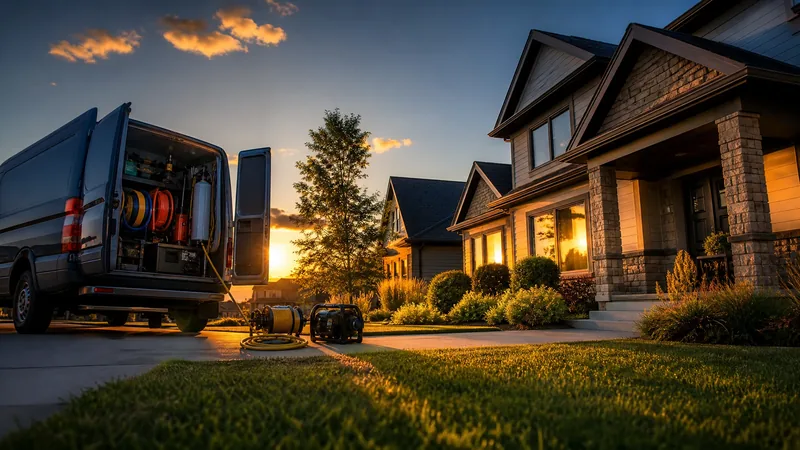
How to Start a Pest Control Business in Washington: WSDA Applicator $243, Operator $78 and the Structural Pest Inspector License
How to Start a Pest Control Business in Washington: WSDA Applicator $243, Operator $78 and the Structural Pest Inspector License
If you want to start a pest control business in Washington, the pest control license Washington requires comes from the Washington State Department of Agriculture (WSDA), not from a local health board. Pest control is regulated under chapter 17.21 RCW. The state issues a commercial pesticide applicator license for the business, a commercial operator license for each employee who applies pesticides, and, if you inspect homes for wood-destroying organisms (WDOs), a structural pest inspector license. This guide covers the order we recommend, the fees we can verify, and the mistakes that cost new operators the most time.
This is informational content, not legal or tax advice. Entity formation, pesticide law and tax treatment all depend on your situation. Talk with a qualified attorney and a CPA before you choose a business structure or sign customer contracts.
What You Need Before You Start
Gather these items before you open any application:
- A business name you have checked in the Secretary of State business search at https://ccfs.sos.wa.gov/#/BusinessSearch
- A Washington street address for your registered agent. PO boxes and private mailbox addresses are not accepted, and the agent must supply an email address.
- A list of every person who will apply pesticides, and the classifications each one plans to test for
- A decision on whether you will perform WDO inspections, since that triggers a separate license
- Proof of the required financial responsibility: $50,000 property damage and $50,000 public liability
- A list of the cities and counties where you plan to work
- A payment card for state fees, since the Corporations and Charities Filing System and the Business Licensing Service both take online payments
Step 1: Decide Which Licenses Your Business Needs
Pest control in Washington is licensed by WSDA, but the business also needs several state and local registrations. Map them out first so you do not pay for one license only to discover you need another. Most new operators need:
- A commercial pesticide applicator license for the business, with exams in each classification you will work in
- A commercial operator license for each technician who applies pesticides
- A structural pest inspector license only if you produce WDO reports, which is a separate annual license
- A Business License Application through the Department of Revenue, which issues your Unified Business Identifier (UBI) and any city or state endorsements
Non-restricted disinfectants need no license, so a business that only sells or uses them for general sanitizing may not need the WSDA pesticide licenses for that work. Confirm the boundary with WSDA before you advertise services.
Step 2: Form Your Business Entity
Your entity choice determines which filings you make. Sole proprietors and general partnerships do not file with the Secretary of State. If you form a limited liability company (LLC), you file a Certificate of Formation with Initial Report through the Corporations and Charities Filing System (CCFS) at https://ccfs.sos.wa.gov/. The state fee is $180.
Follow these rules when you pick the name:
- The name must include Limited Liability Company, Limited Liability Co., L.L.C. or LLC.
- It must be distinguishable from every other business name on record with the Secretary of State.
- It cannot include bank, banking, banker, trust, cooperative, any combination of industrial and loan, or any combination of two or more of building, savings, loan, home, association and society (RCW 23.95.305).
If you need time to finish paperwork, you can reserve a name for 180 days for $30. Expedited service is $100 per business entity and is generally processed within three business days. Choose expedited if you have a contract waiting.
Every business must designate a registered agent with a physical Washington street address (RCW 23.95.415). A commercial agent is registered with the Secretary of State, and a noncommercial agent can be any person or company who consents to serve. Changing the registered agent carries no fee.
Once formed, an LLC files an annual report every year for $70. It is due by the last day of the month in which the LLC was originally formed, and you can file it up to 180 days early. A late filing carries a delinquency fee, bringing the total to $95. Put the due date on your calendar the day you form the company.
Step 3: Register With the Business Licensing Service
Washington has a statewide general business license. The Business Licensing Service (BLS), part of the Department of Revenue, handles it through the Business License Application at https://dor.wa.gov/open-business/apply-business-license. The application issues your nine-digit UBI number and handles city and state endorsements in one filing.
Register with BLS if your business needs city, county or state endorsements, plans to hire employees within 90 days, sells anything subject to sales tax, has gross income of $12,000 per year or more, or owes any tax or fee to the Department of Revenue. In practice, a pest control company will almost always meet at least one of these tests. Corporations and LLCs must file with the Secretary of State before they submit the BLS application.
The processing fee is $50 to open a business, plus separate endorsement fees. Timing depends on how you file:
- Online: about 10 business days
- Online with city or state endorsements: add 2 to 3 weeks, since those approvals take longer
- By mail: up to six weeks
If you will operate under a name other than your legal name, such as a company name for a sole proprietorship, register a trade name. Trade name registration is filed with BLS, not with the Secretary of State or your county. The fee is $5 for each trade name, plus the non-refundable $50 processing fee to open a business. If you add a trade name to a business you already have, the processing fee is $10. Details are at https://dor.wa.gov/manage-business/grow-business/register-trade-names.
Step 4: Pass the WSDA Commercial Pesticide Applicator Exam
The business license from WSDA is the commercial pesticide applicator license. It costs $243, plus $27 for each extra apparatus, such as an additional truck or rig you operate under the license (RCW 17.21.070). Before you apply, plan the exam schedule:
- You must pass the exam in each classification you plan to work in. Schedule the classifications that match your services, since a single exam does not cover everything.
- The owner or manager must pass the exams. A technician cannot substitute for the person who is legally responsible for the business.
- Licenses require recertification every 5 years. Calendar the renewal, and keep your continuing education records organized.
Ask WSDA for the current study materials and exam format before you schedule. The exact exam content and testing logistics come from WSDA, and they can change, so confirm them on the WSDA pesticide licensing pages.
Step 5: License Every Technician
Each employee who applies pesticides needs a commercial operator license. The fee is $78 per operator (RCW 17.21.110). Like the applicator, operators must pass exams in each classification they will work in. Do not dispatch a technician to a job until that person's license is issued. Keep a copy of each license in a file at your office, and check expiration dates at least 60 days before renewal. Recertification follows the same five-year schedule.
Step 6: Carry the Required Financial Responsibility
WSDA requires financial responsibility of $50,000 for property damage and $50,000 for public liability (RCW 17.21.134 and 17.21.170). In practice, most operators meet this with a commercial general liability policy, but the form of proof and the carrier requirements are set by WSDA. Ask WSDA which documents it accepts, and ask your insurance agent to confirm the policy language matches those requirements. Carry the certificate in your truck. Customers and inspectors may ask for it.
Step 7: Decide Whether You Need the Structural Pest Inspector License
A structural pest inspector license is a separate annual license for anyone who prepares wood-destroying organism reports, typically for real estate transactions. The statute sets the fee at $78 (RCW 15.58.205). Because fee amounts on state forms change, check WSDA for the amount printed on today's form before you submit payment.
Commercial applicators and operators acting within their licenses are exempt from the inspector fee. That means a technician who treats a home under an existing applicator license does not need a separate inspector license for that treatment. A company that issues standalone WDO reports for sale or refinance, though, should confirm the scope of its license with WSDA before it starts that line of business.
Step 8: Check City and County Requirements
Washington has 39 counties and 281 incorporated places, which include cities and towns. Most pest control work does not need a local license, but the state allows some local governments to license structural pest operators. Under RCW 17.21.305, first-class cities with 100,000 or more residents and their counties may do so. Seattle, Spokane and Tacoma are examples of cities in this category, so check the rules for each place where you plan to work. Confirm with each city or county clerk or business licensing office before you start service there.
Also plan for local business taxes. Washington has no corporate income tax and no personal income tax on wages. Instead, most businesses pay the state business and occupation (B&O) tax, a gross receipts tax with more than 50 activity classifications and no deduction for labor, materials or other costs. About 54 cities levy their own B&O tax, which the Department of Revenue does not administer. Ask the city where your office sits whether you owe local B&O, and check the cities where you will do most of your work.
Step 9: Set Up Sales Tax and Records
The state sales tax rate is 6.5 percent. If you charge customers sales tax on any product or service, you must register through BLS. Confirm with the Department of Revenue which of your pest control services are taxable before you write your price sheet, because the answer determines what you collect and report.
Keep records from the first day: application logs, product labels, technician licenses, insurance certificates and inspection reports. Your files will matter during inspections, renewals and any dispute with a customer.
Common Mistakes to Avoid
- Using a PO box for the registered agent. PO boxes and private mailbox addresses are not accepted.
- Forgetting the annual report. The $70 fee becomes $95 with a late penalty, and the due date is tied to your formation month.
- Operating under a trade name you never registered. A trade name must be registered with BLS.
- Assuming the inspector fee is always $78 without checking. The statute sets the fee, but confirm the figure on WSDA's current form.
- Sending a technician out before the license is issued. Wait for the license, then assign work.
- Letting the owner skip the exam. The owner or manager must pass the required exams.
- Letting a recertification date slip. Licenses require recertification every 5 years.
- Assuming one license covers everything. Applicator, operator, inspector and BLS registrations are separate filings.
- Buying insurance before you know the requirement. Confirm WSDA's accepted proof of the $50,000 and $50,000 coverage first, so you do not buy the wrong policy.
Timeline and Fees at a Glance
| Step | Agency | Fee | Timing |
|---|---|---|---|
| Name reservation | Secretary of State | $30 | Holds the name for 180 days |
| Certificate of Formation (LLC) | Secretary of State, CCFS | $180 | Expedited service $100 per entity, generally within three business days |
| Annual report (LLC) | Secretary of State | $70, or $95 if late | Due by the last day of the formation month each year |
| Business License Application (UBI) | Department of Revenue, BLS | $50 processing fee plus endorsements | Online about 10 business days; 2 to 3 weeks longer with endorsements; by mail up to six weeks |
| Trade name (DBA) | Department of Revenue, BLS | $5 per trade name, plus processing fee | Filed with the Business License Application |
| Commercial pesticide applicator | WSDA | $243, plus $27 per extra apparatus | Confirm current processing time with WSDA |
| Commercial operator (each technician) | WSDA | $78 | Confirm current processing time with WSDA |
| Structural pest inspector (annual) | WSDA | Statute sets $78 (RCW 15.58.205); confirm current amount | Annual renewal |
Expected Results
A license is a legal starting point, not a guarantee of customers or results. Most applicants who gather their documents first and file in the order above may find the process moves more smoothly, though agency timing can change without notice. Once licensed, your business may be positioned to bid on commercial accounts and real estate inspections that require proof of state licensing.
Treatment results depend on the pest, the structure, the product and the label directions. Describe your services as what the product is designed to do, and avoid promising complete elimination or a specific outcome in your marketing. Keep your claims consistent with the product label and with what your technicians can document.
Next Steps
Start with the LLC or other entity filing, since the BLS application depends on it. While those filings process, schedule your applicator and operator exams with WSDA, confirm your insurance proof, and check the city and county rules in your service area. The Washington Small Business Development Center offers free counseling for new owners at https://wsbdc.org/, and it can help you review your business plan before you commit to a structure.
Disclaimer: This article is informational content about starting a pest control business in Washington. It is not legal, tax or insurance advice. Fees, timelines and requirements change, and some figures in this guide must be confirmed with the named agency before you rely on them. Consult a qualified attorney, a CPA and a licensed insurance professional before forming your business, choosing a tax treatment or signing customer contracts.
Keep exploring: related Washington guides
- How to Start a Lawn Care Business in Washington
- How to Start a Junk Removal Business in Washington
- How to Start a Landscaping Business in Washington
- How to Start an LLC in Washington
- Washington Business License
- How Much Does It Cost to Start a Business in Washington
- All Washington business types
- Every Washington guide in one place